Thirty Days of Poetry. Day #9.

Day #9: The Hoot Review

Celebrating National Poetry Month by highlighting 30 days of literary journals that publish poetry you can listen to or read in 5 minutes or less.

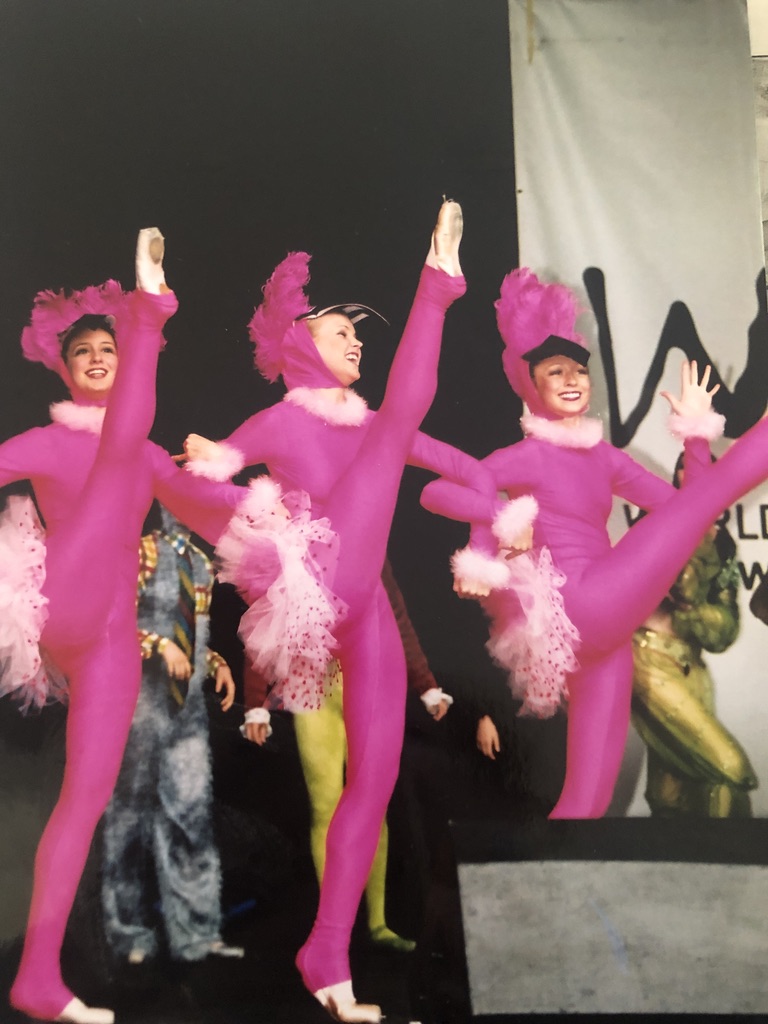
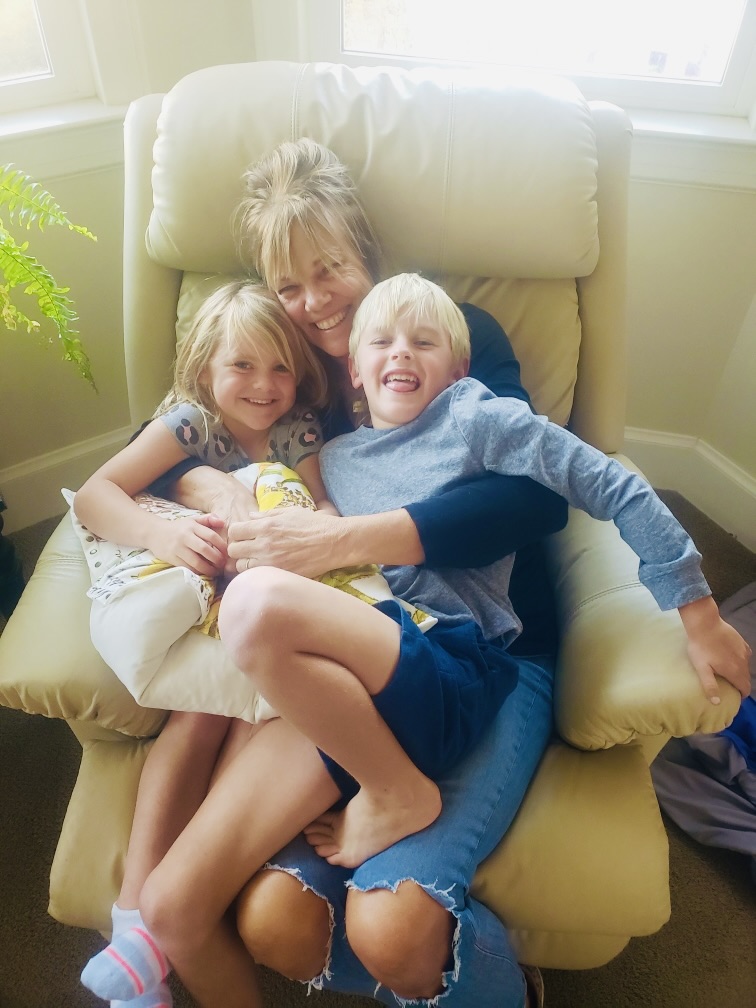
This recommendation is for my daughter, Erin. Of course I’m biased, but she really is one of the most joyful humans I know. She’s also one of the most busy, yet skillful at finding time to fit in things she has to do – like mother two kiddos and work hard – while simultaneously making those around her feel special.

So this recommendation is for all you really busy people, especially those who say you have no time to seek out poetry. I give you The Hoot Review.

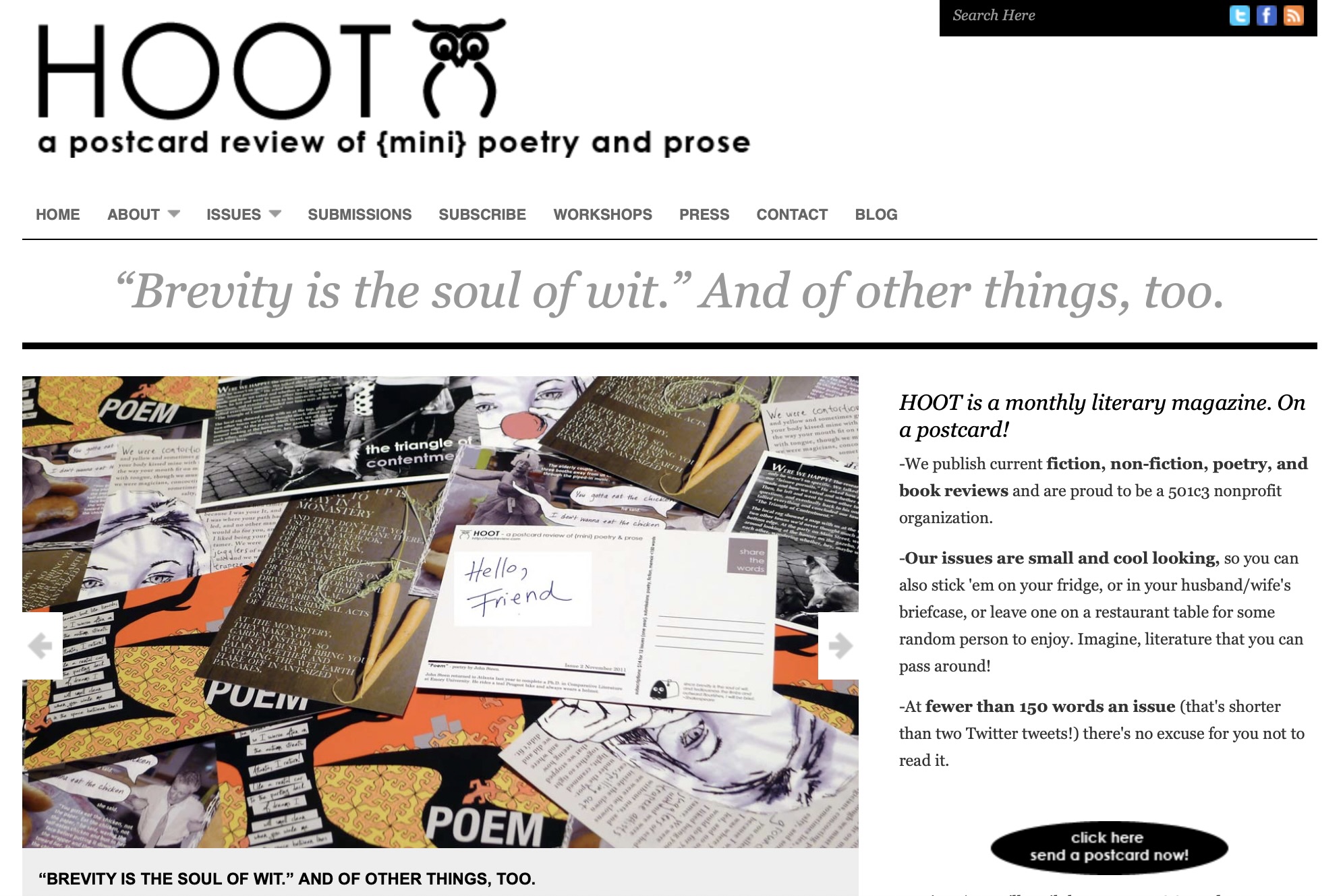
Each issue is one poem. On a postcard. 150 words or less. 

From the “About” page: 

HOOT is a postcard.  A very nice-looking one.  With writing on it!

It is also a little more complicated than that.  It is also:

a brief, displayable, shareable literary magazine.

The idea is:

-to have stories and poems on a postcard, so that they can be displayed and shared easily. Stick it on the fridge! Tuck it in your husband’s/wife’s briefcase or nephew’s bookbag!”

I give The Hoot Review a double endorsement: brevity and when you visit the print issue online, there is an audio file of the poet reading their poem.

The most recent poem, “You, You Brilliant” by Sean Lyon is a fitting lyric for a Saturday night. 

“Dance like you have a cadre of backup beauties

dressed as aliens or jellyfish…”

Go on now and dance. But first, go experience 5 minutes or less of poetry.

Thirty Days of Poetry. Day #8

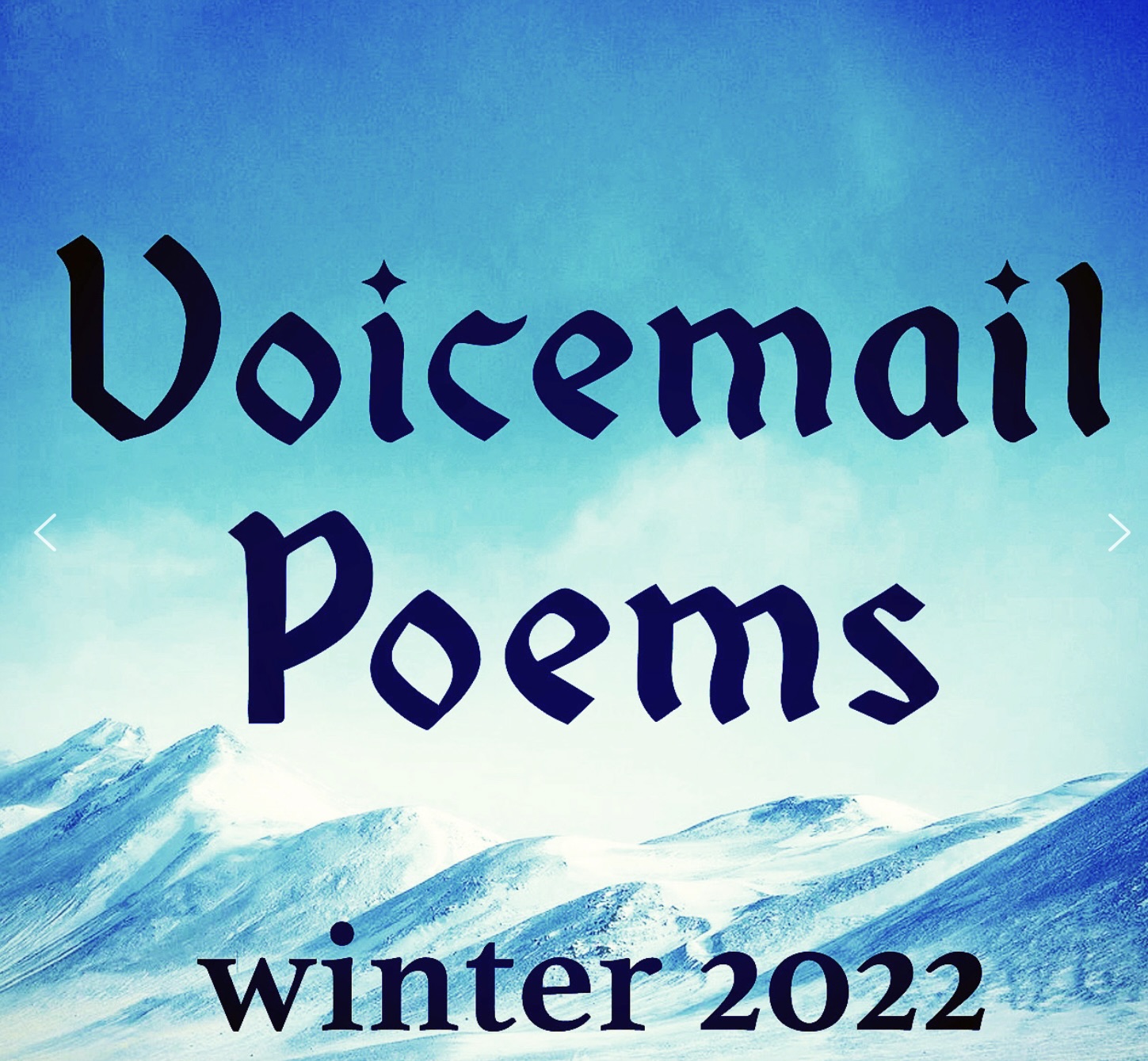
Day #8: Voicemail Poems

Celebrating National Poetry Month by highlighting 30 days of literary journals that publish poetry you can listen to, or read, in 5 minutes or less.

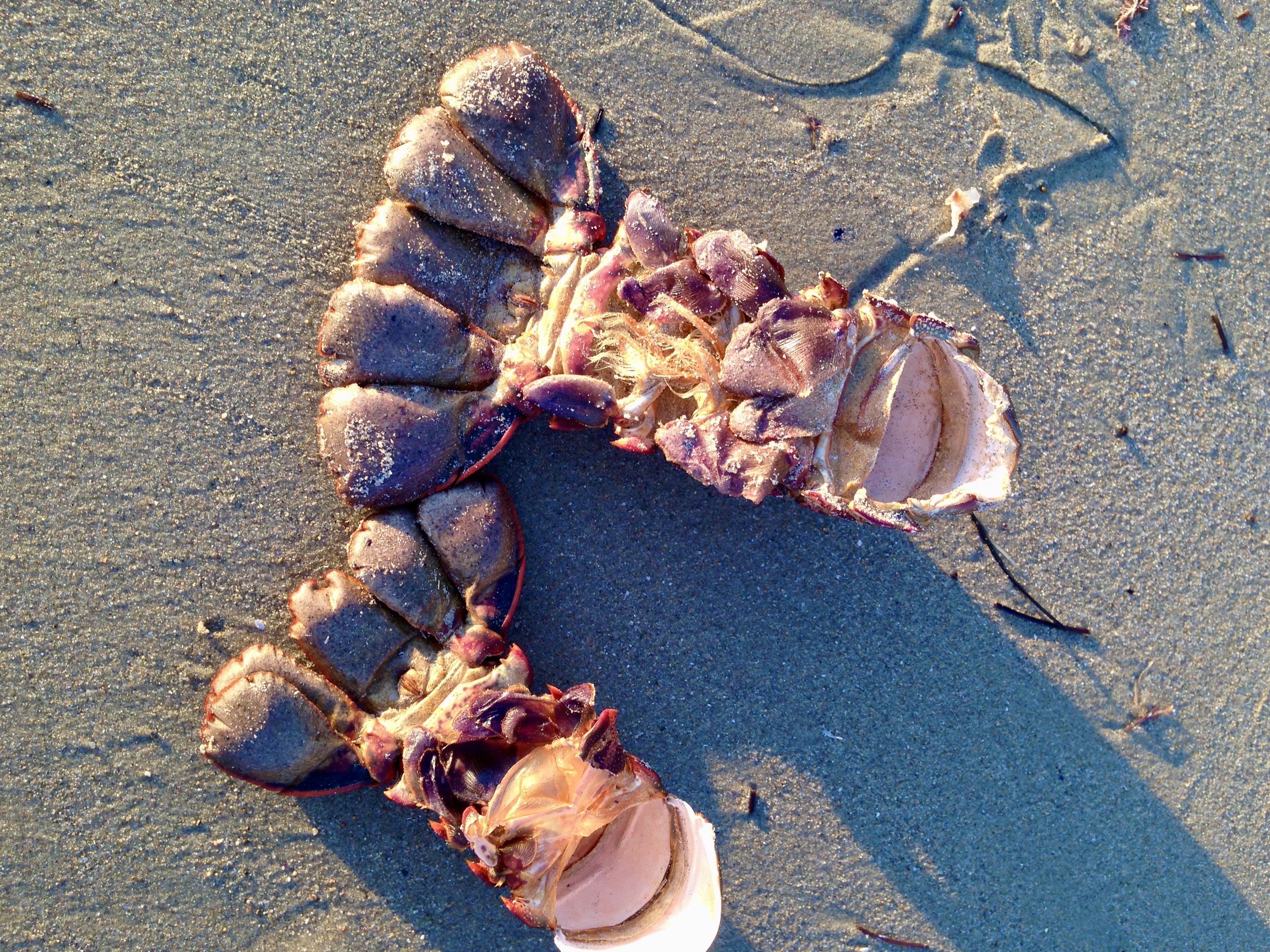
Two upturned pink lobster tails in the setting sun on beach sand

Have you ever come upon something that looks as if it was abandoned moments before you found it? These empty pink lobster tails, lit by the setting sun on wet sand at the tide line, are just that, and a metaphor for this 30 Days of Poetry Project, Day #8.

The image represents me shedding the idea of focusing on literary journals that you can solely read rather than listen to. Poetry is, after all, a literature meant to be heard. 

Today’s journal recommendation, Voicemail Poems, is for my friend Pam who lost her sight as an adult. Pam says she’s been a bit surprised by how unpleasant it is to explore poetry journals using only the monotone voice of her screen reader so I went in search of those that also offer audio or video.

Voicemail Poems is “an online magazine that highlights the intimate and raw voices of new and established writers of all styles. Poets submit to the magazine by reading their work to a voicemail box. Our favorites are picked seasonally and published on our website and our Soundcloud.” 

That’s right. You get a variety of poets’ voices in your ear with each issue.

One of my favorites poems from the recent Winter, 2022 issue is Crystal Silva’s “primas”

The beginning goes like this:

we bump over basement tile, toes stubbing
over grout grooves. sock-skating
while our tios pinball pool cues upstairs.
lips covered in egg-sweet crumbs gush
of some-days and one-days, when we’re big.

Click around the site and listen to all the voices.

In the category of “some-days and one-days”, yes, I’m trying to do better to get this site more accommodating for all persons on the human experience / sensory ability spectrum. I’m a really slow learner. I make so many mistakes.

Thank you for your patience with my learning curve. And thank you for all your suggestions and questions. It’s feeling like an exquisite scavenger hunt to find just the right poetry fit for my friends this month.

Thirty Days of Poetry. Day #7

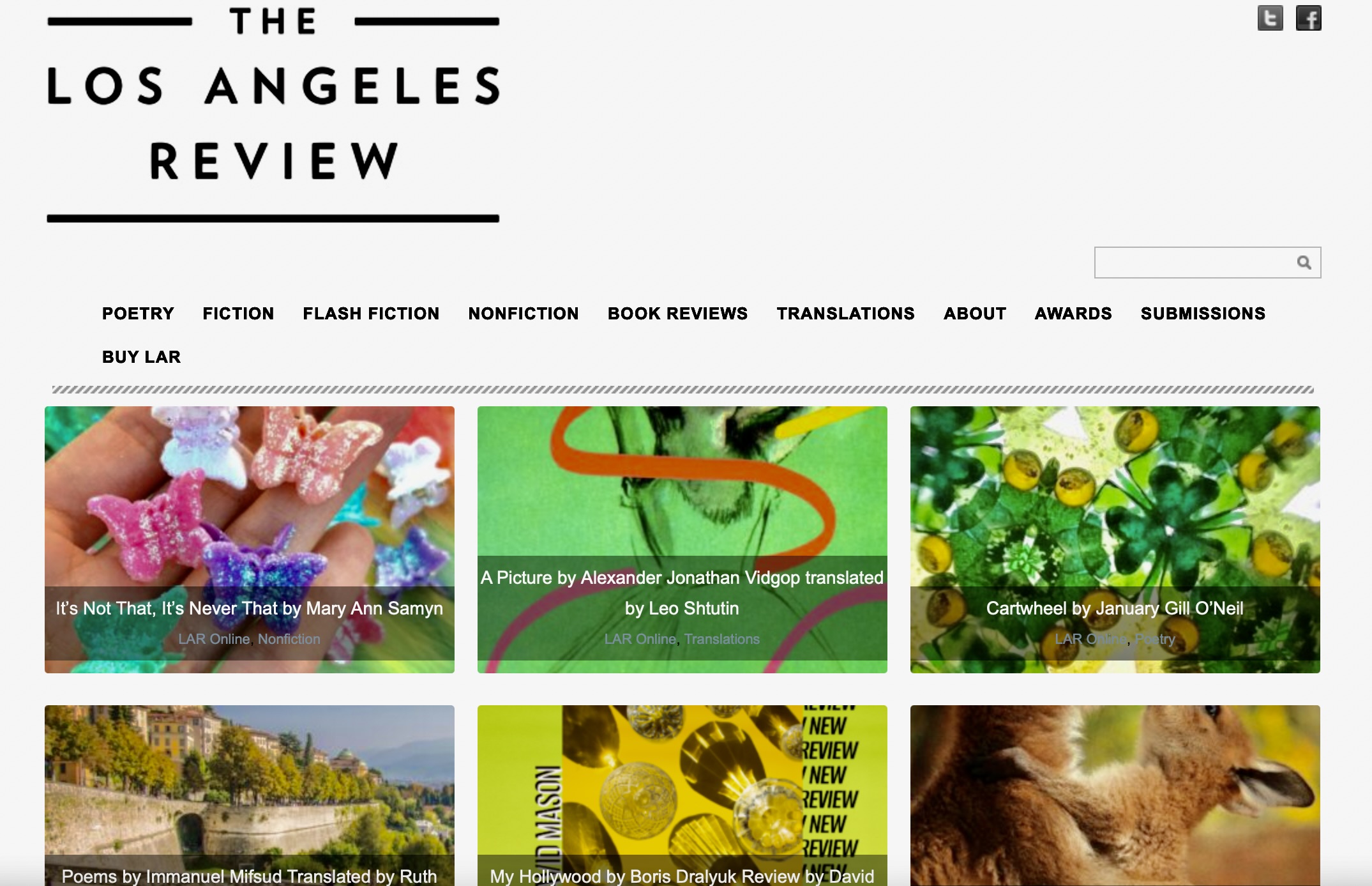
Day #7The Los Angeles Review

Celebrating National Poetry Month by highlighting 30 days of literary journals that publish poetry you can read in 5 minutes or less.

Can you love a city like a friend? I do. Born, raised, educated, loved, ignored, entertained, and always welcomed home by my city. This recommendation is for Los Angeles, and all the friends I first found within its borders of beauty, glory, pain and wildness.

The Los Angeles Review, according to its website, is: 

“an annual print and online literary journal established in 2003, is the voice of Los Angeles, and the voice of the nation. With its multitude of cultures, Los Angeles roils at the center of the cauldron of divergent literature emerging from the West Coast. Perhaps from this place something can emerge that speaks to the writer or singer or dancer or wild person in all of us, something disturbing, something alive, something of the possibility of what it could be to be human in the 21st century.”

There are so many poetry offerings on its pages, each paired with an evocative photo. Sometimes I like to scroll deeply through the archives, especially if I’m new to a journal or haven’t read it in a while. One of my all time favorites from The Los Angeles Review is “A Happy Ending” by Leah Umansky.

“A Happy Ending” begins like this:

A ship isn’t built to stay safely tied to harbor. All the ways we wander and wave: the sails in the wind, the convex of their girth, the flummox of their flail.

The last decade, its nearing of time, and the ways I cling to what I cling to: of what belongs, of what is far-reaching, of what is bound for refuge or for naught.

“All the ways we wander and wave…” Aren’t we all just trying to find our happy endings?

Thank you all so much for your favorite poetry-publishing journal recommendations. Keep them coming. So many journals to discover!

There’s truly no end to the number of ways to bring poetry into your life.

Thirty Days of Poetry. Day #6

Day #6: Palette Poetry

Celebrating National Poetry Month by highlighting 30 days of literary journals that publish poetry you can read in 5 minutes or less.

This recommendation is for my Laura, my friend who approaches every moment of life with the openness of a wild spring bouquet. Laura is the kind of person who stays curious about the back stories of people she meets. She’s one of the best listeners I know, the friend who always lifts you up.

Similarly, from the Palette Poetry Mission Statement:

Palette Poetry endeavors to uplift and engage emerging and established poets in our larger community.

The world is eager for poets. In 2016, more people spent their hard earned money on poetry books than any other year on record. When times are dark, the world always turns to poets for empathy, for answers, for words, bucking and new.

Palette Poetry is here to paint our small part of the world with truth through poetry, as hopeful and eviscerating as truth can be.”

Palette Poetry is one of the most intentional journals I know about being “an inclusive and safe and encouraging space for all voices, especially those that often go unheard or unrecognized.”

What do I mean by being intentional?

Palette keeps a reserved portal for traditionally under-represented poets to submit work and receive a response more quickly than the general submission category with this explanation:  “We at Palette Poetry hope to use our platform to actively begin demolishing the discriminatory systems that pervade the publishing industry.  To that end, we welcome Black writers, Indigenous writers, and writers of color (BIPOC) to submit through this category for a quick decision made directly by the editors. We’ll do our best to return a decision on your poetry within 2-4 weeks.”

One of my favorite recent poems is “I Want to be Alive for a Reason” by Summer Farah. 

Here’s a sneak peek of the beginning.

i want to sing & remember wind i think of my training of breath control               the power of looking of feeling song against my teeth                instinct lost i press my hand to diaphragm & nothing balloons underneath you used to be so strong my mother says you used to be so strong before before before 

By Summer Farah

After you scroll through Palette Poetry, let me know your new favorite poem.

Until then, stay colorful. Read more poetry. This month and always.

Thirty Days of Poetry. Day #5

Day #5: The Margins

Celebrating National Poetry Month by highlighting 30 days of literary journals that publish poetry you can read in 5 minutes or less.

Day #5: The Margins

This is for Linda, my spiritual friend, the kind of person who will teach you to hula on earth’s ledges at sunset to raise a full moon.

The Margins is the literary journal created by the Asian American Writers’ Workshop

AAWW is “ devoted to creating, publishing, developing and disseminating creative writing by Asian Americans, and to providing an alternative literary arts space at the intersection of migration, race, and social justice. Since our founding in 1991, we have been dedicated to the belief that Asian American stories deserve to be told.”

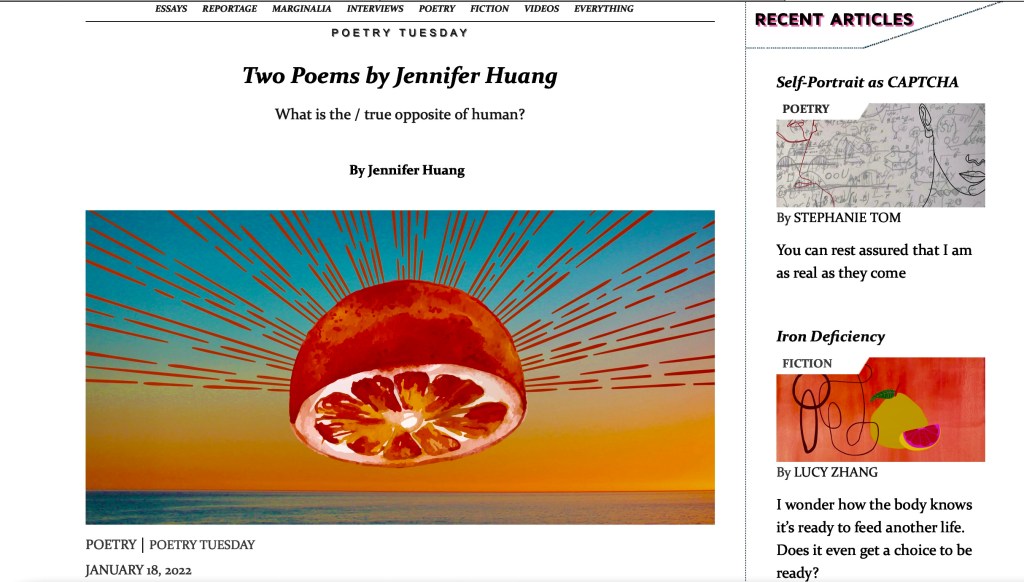
The Margins offers a regular Poetry Tuesday section featuring, you guessed it, new poetry. One of my all time Poetry Tuesday favorites is “Two Poems” by Jennifer Huang.

Here’s the beginning of “Notes on Orange”

Notes on Orange

In case you’re wondering, the fruit came first, the color
name second. They called it red-yellow for some time, and
for some time it was just that. Red brought nearer to
humanity by yellow, as Kandinsky described it. I am just
that: a human who wants to be closer to god. 

from “Notes on Orange” by Jennifer Huang

Grow a little this National Poetry Month. I like to think that’s why it’s in spring, the season of buds and blooms. Let me recommend a journal just for you. I really like being a poetry matchmaker. 

Thirty Days of Poetry. Day #4

Day #4: Honeyguide Literary Magazine

Celebrating National Poetry Month by highlighting 30 days of literary journals that publish poetry you can read in 5 minutes or less.

Day #4: Honeyguide Literary Magazine

I’ll be honest. I know way more animal lovers than poetry readers and writers, so this recommendation is for all the creature-caring humans, my temporary houseguest, mrbond_thepug, who helps me read, and especially for my vet, Dr. Ryan.

Honeyguide Literary Magazine is your home for all literature and art about animals. Always.

Chief Editor Amanda Marrero started the journal after a family of foxes moved into her backyard and she noticed so many similarities between humans and wild animals.

From the Honeyguide Literary Magazine “About” page: “I wanted a magazine that examined the intersects between the human and animal experience, how one fed into the other, and although we are very different, our lives, questions, struggles, hopes and fears are very often the same.”

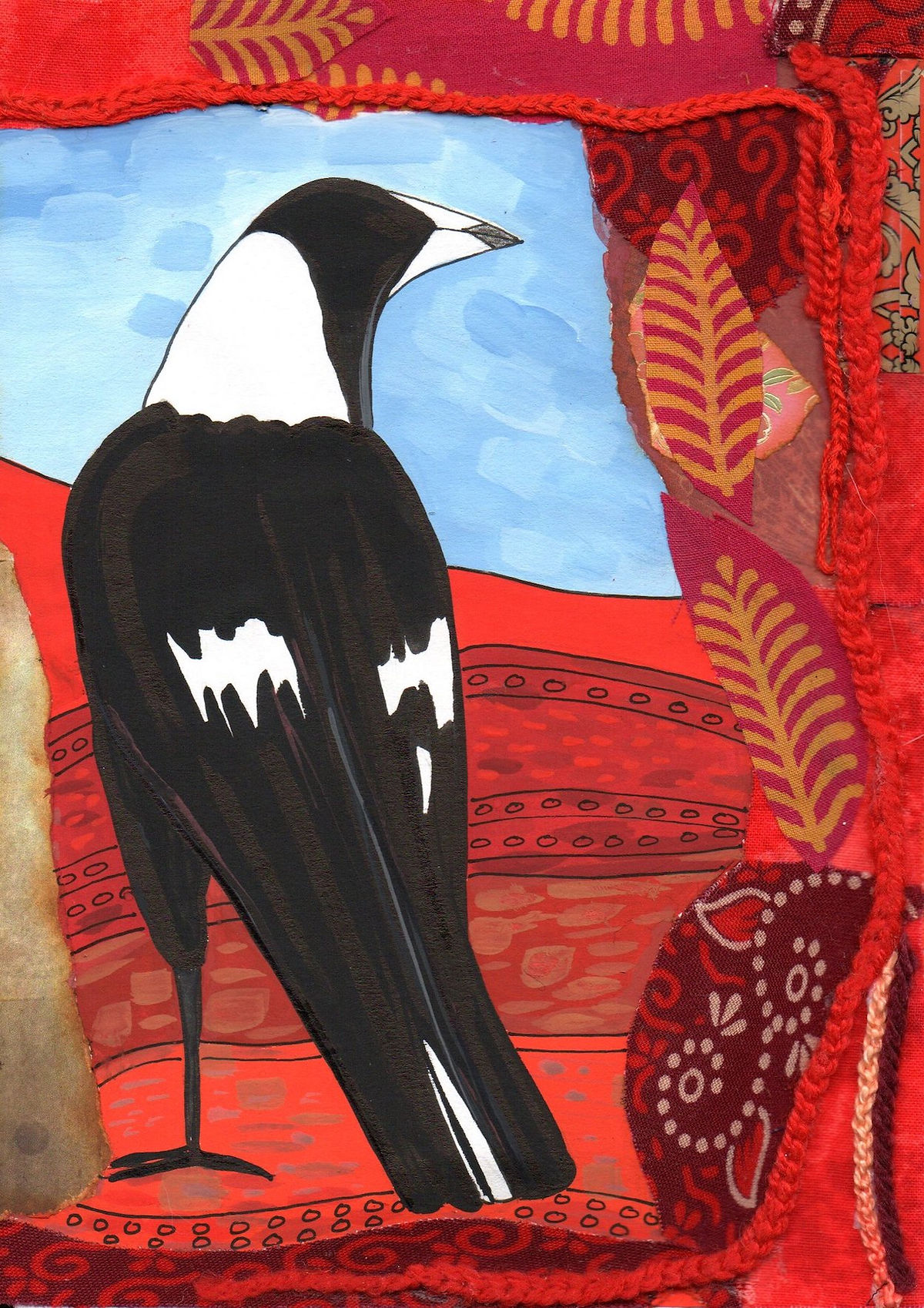
Take special note of this gorgeous cover art, (and see the others on the website) one of a series of five mixed media pieces collectively called Nefelibata from the Portuguese for “Cloud Walker: One who lives in the clouds of their own imagination or dreams, one who does not obey conventions.” It was created by Oormila Vijayakrishnan Prahlad, an Indian-Australian artist, poet, and pianist, who serves as a chief editor for Authora Australis, a new literary journal from Australia.

Below is an excerpt from “In Great Waters by Kiersa Recktenwald featured in Honeyguide Literary Magazine Issue #3.

Center of its universe, the fish

moves in slow decisions made for it

by ancient ritual and timeless ways.

Sunlight captures the sea, but not these eyes. 

Moonbeams sleep above his wanderings…

Yes, there is no end to the link between one literary journal and another and if you want me to select one just for you to read, reach out. Because truly, whatever your heart needs, there’s a poem for that.

Thirty Days of Poetry. Day #3

Day #3: Whale Road Review

Celebrating National Poetry Month by highlighting 30 days of literary journals that publish poetry you can read in 5 minutes or less.

Day #3: Whale Road Review

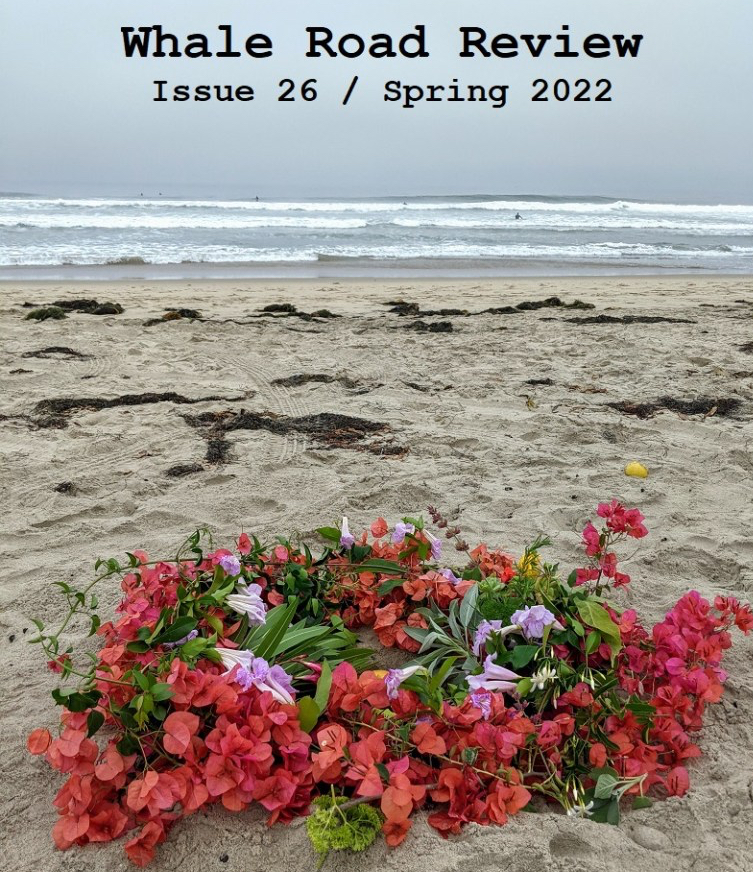
This one is for Diana, one of my favorite friends to share gifts that honor grandmothers. We both deeply loved our grandmothers, and we now revel in our time as grandmothers. For Diana’s birthday I gave her Katie Manning’s chapbook, 28,065 Nights, one of the most poignantly beautiful literary tributes to a grandmother I’ve ever read.

I now follow what poet Katie Manning does, and it turns out she’s Founder and Editor-in-Chief of a literary journal, Whale Road Review

From the website: “Whale Road Review publishes poetry, flash fiction, and micro essays that don’t demand too much time up front, but somehow leave readers changed. We hope readers of all sorts will enjoy these short pieces in stolen moments—waiting in line, using the restroom, riding a train, steeping tea.”  

Fits my promise to find you “poetry you can read in 5 minutes or less.”

Which poem to choose? I recommend you take your poetry pause with a tribute to the season of renewal; read “Come Down Spring” by Rebecca Lehmann who is herself an editor of a poetry journal that will pop up later in the month.

An excerpt:

Come down spring and greet us with tulips,
with snowdrops, with crocus and iris.
Come down little moonflowers
crowing open in the middle night.
Come down spring with itchy eyes
and flat vocabulary, with holidays
of rebirth and fecundity, of miraculous
blood-smeared evasions of the angel
of death. Come down spring
like a slender moon sunk into the great
Pacific Ocean. 

Keep your poetic heart open. Keep loving. And reach out if you want me to recommend a literary journal that publishes poetry you might like.

Thirty Days of Poetry. Day #2.

Celebrating National Poetry Month by highlighting 30 days of literary journals that publish poetry you can read in 5 minutes or less.

Day #2: Words Without Borders

If you’re like my friend Emily, a voracious literary fiction reader working her way through the top 100 international classic books of the past century, curious about poetry but unsure where to begin reading, you might like Words Without Borders. 

Mission: “Words Without Borders expands cultural understanding through the translation, publication, and promotion of the finest contemporary international literature.”

Below is an excerpt from the newest poetry publication titled “February 23, 2022” by Danyil Zadorozhnyi. Translated from Ukrainian by Isaac Stackhouse Wheelerand by Yuliya Charnyshova

“and if the war, not just any war, came to our home
and we had to flee to another city in another part of the country
I’d like to be helped there
not for the people there to make xenophobic comments on the internet
trying to catch my kids speaking the wrong language
twisting my wife’s tongue—she’s from Belarus, for heaven’s sake, seeking shelter here”

Reach out if you want me to find a poetry-publishing literary journal hand-selected just for you.

There are hundreds. Find one you love and read more poetry.

Write poems.

Listen with your heart.

Thirty Days of Poetry. Day #1

Celebrating National Poetry Month by highlighting 30 days of literary journals that publish poetry that you can read in 5 minutes or less.

Day #1: Electric Literature

Electric Literature is BIG, in content, scope and vision: “to make literature more exciting, relevant, and inclusive.” Editors and interns work hard to create a digital world that imagines the real world I want to live in where every voice gets equal space and a damn cool picture. Sign up for The Commuter, their free digital lit magazine featuring a single taste of poetry, flash, graphic, or experimental narrative arriving by e-mail every Monday morning.

Two recent favorites offerings are: “Devour My Blackness While I Sit Here Hungry,” two poems by Anya Pearson and “How Do You Exist In a World that Sees You As Monster or Ghost?,” a written conversation between writer Sam Risak and poet Christian J. Collier about his new chapbook, “The Gleaming of the Blade.”

Stay lit. Read poetry.

“You will go back to your own life…

I’m on a quest to intentionally incorporate one simple act of kindness into each day for one year. My hope that kindness can change the world feels a little like throwing a glass ball into the ocean and believing it won’t break.

You can call this series: 365 Reasons to Roll Your Eyes, but science says your own happiness will increase if you share the journey.
~~~~~~~~~~~~~~~~~~~~~~~~~~~~~~~~~~~~~~~~~~~~~~~~~~~~~~~~~~~~~~~~~~~~~~~~~~

“You will go back to your own life, but what will happen to me?” This simple question, asked years ago by a young boy, haunted a poet / editor friend of mine and ultimately inspired her to publish Collateral Damage, a benefit poetry collection dedicated to children impacted by trauma.

7TZr+hJ6TbusB7Wq0tmW6Q_thumb_2b75

I first met Ami Kaye, that poet and editor, shortly after I embarked on my dream of creating dirtcakes, a literary journal. 

“Exceptional works to replenish the spirit.”

This mission statement of Glass Lyre Press, Ami’s publishing imprint, inspires me. It resonates with my own reasons for wanting to get into publishing, what I hope to accomplish every time I sit to write: “to replenish the spirit.”

I sought out Ami at a writer’s conference in Los Angeles to ask her advice for running an independent literary press, which means one with no institutional financial support.  Ami graciously encouraged me, then painted a picture of how at publication time she rallies a small group of volunteers around her dining room table in Illinois. They make editorial decisions about which literature will further the mission of the press, design covers and interior typesetting, diligently proofread galleys, hand package the books and magazines to be sent out to readers. Finally, someone volunteers to drive the batch to the post office.

All for the love of the word.

For so many creatives – writers, artists, musicians – and the people who promote their work, getting art out to humanity is a gesture of kindness. My lasting impression after first meeting Ami Kaye was that she’s a woman who leads with her heart. 

So I wasn’t at all surprised when I learned to she was putting together a benefit anthology titled Collateral Damage.

“This benefit anthology seeks to raise funds for children with basic survival needs, for programs that protect and educate children, and foster child advocacy. This book will highlight children caught in the crossfire of war and political strife, adult ambition and greed. It will also address the transformative power of love and care. As current custodians of this world we need to protect the future: our children. Only if we work together can we harness the strength to speak up for those not allowed a voice; turning away is not an option anymore.”

I consider myself fortunate to now hold Collateral Damage in my hand. It includes two of my poems alongside powerful work from many of my poetry heroes. Not surprisingly, one of my poems is about sharing bread.

CDamage

Putting precious resources of time and money into a book of poetry as a response to war, famine, abuse, injustice and healing might seem like a small, insignificant act of defiance.

But guess what? Counterintuitively, it may be one of the most effective ways to combat psychic numbing to trauma, whether personally experienced or witnessed through media, by offering our human psyches specific imagery, which is one of the superpowers of poetry. And that’s intriguing considering that the National Endowment for the Arts just reported poetry reading is on the rise, at its highest levels since shortly after 9/11/01.

Poet Naomi Shahib Nye offers insight into how poetry has the ability to uniquely connect humanity in an often quoted essay which appeared on Oprah.com  in early 2002.

“Apparently, the entire United States has taken to reading more poetry, which can only be a good sign. Journalists ask, “Why do you suppose people are finding strength in poetry now?” Those of us who have been reading poetry all our lives aren’t a bit surprised. As a direct line to human feeling, empathic experience, genuine language and detail, poetry is everything that headline news is not. It takes us inside situations, helps us imagine life from more than one perspective, honors imagery and metaphor—those great tools of thought—and deepens our confidence in a meaningful world.”

The allure of poetry, of its ability to find a way “inside situations” and create an impact makes sense according to research on witnessing reactions to wide scale trauma by Paul Slovic, PhD, founder and president of Decision Research, a non-profit organization investigating human judgment, decision-making, and risk. Dr. Slovic has invested much of his career trying to understand why epic tragedies like mass genocide, climate change, refugee crises, create numbing among witnesses rather than mass action.

In a 2018 interview with science reporter Brian Resnick in VOX, Dr. Slovic broke down some key findings:

“People care about individuals. We see it over and over again: There’s a child who needs an operation, his parents can’t afford to pay for this operation, and there’s a story in the newspaper. An outpouring of money donations and support is often tremendous. We do care a lot about individuals. We don’t scale that up, even when we’re capable.

“Individual stories and individual photographs can be effective…they get us to see the reality, to glimpse the reality at a scale we can understand and connect to emotionally. But then there has to be somewhere to go with it.

“These…stories of individuals…give us a window of opportunity where we’re suddenly awake and not numbed, and we want to do something. If there’s something we can do, like donate to the Red Cross, people will do it. But then if there’s nothing else they can do, then over time that gets turned off again.”

So here, in Collateral Damage, are poems, “stories of individuals.” One poem, “An Interdiction Forbidding Mourning: Tehran, 2009” by Susan Fox, is dedicated to “Neda Sultan Agha, shot by a sniper for not wearing a chador.” Another, “The New Breed” by Alison Letterman is “For Emma Gonzalez and the other student activists” who are protesting gun violence. The collection holds heartbreak and paths to redemption. 

After I received my contributor copy of Collateral Damage, I sent Ami Kaye a few questions via e-mail about the back story of the anthology and her hopes for its future. She graciously responded for you, dear readers. 

What inspired this anthology?
During an undergrad semester I worked at a blind school and struck a friendship with a teenage boy. After the day’s lesson I shared stories and poems, he sang songs and told me of his dreams. On my last day he was withdrawn and refused to speak to me. After some prodding he burst out, “You will go back to your own life, but what will happen to me?” His words always stayed with me and I became very conscious of the plight of children. After I became a parent, I was even more aware of the staggering problems facing children, and while I was involved in various ways over the years, I did not have the means to do much. Now with the energy and talent of so many wonderful people, I hope we can do more.

In what ways did the project exhaust or energize you?
The sheer volume of correspondence, reading and selecting work, and the production logistics were daunting, but the response from the literary community warmed our hearts. I think that kind of enthusiasm, the shared dedication, and most of all, the thought of the children energized everyone working on this multi-dimensional project.

What did you have to say “no” to in order to say “yes” to this project?
We did not say no to other projects so last year was difficult for all of us. We ended up with a four-month backlog that has spilled into this year, but we think it is worth getting this project off the ground.

Was there a poem (or more than one) that made you cry?
There were several poems that hit me in the gullet. Some poems were powerful, some arresting, some with vivid visuals, but all had components that bolstered the cause. Taken as a whole, the book gives a voice to those rarely allowed one. I know readers will find a number of poems that speak to them.

Who deserves a shout-out for making this a reality? (I see Tracy McQueen, Steven Asmussen, Linda E. Kim, and Karen Bowles’ names on the front matter. Anyone else? Do you care to say a small detail about something one of them did that made the project as beautiful as it is?)
Steve deserves the lion’s share of praise for production, but Linda Kim and Karen had the painstaking job of copyediting. Karen especially, while wrestling with health issues and an evacuee from the recent California wildfires, somehow found the energy to participate in this project. Tracy’s stark cover art is a wordless poem. Most of all, each and every one of our authors and submitting poets deserves a shout out for their dedication to this cause. That kind of sincerity and emotion humbles me and gives me hope.

Is there one specific organization that will benefit from the proceeds? What impact do you imagine it will have?
We were originally thinking of UNICEF, or we’d like to try an organization more likely to allot a greater percentage of funds directly for the children. We are thinking of Shriner’s Children’s Hospital, and a few others. Please email amikaye.pf@gmail.com with any other suggestions.

Obviously our first hope is to raise money for the children, but sometimes impact comes in unforeseen ways. I hope people will read the heartrending poems and be moved to spread the word and raise awareness for programs that benefit and foster child advocacy.

I’m deeply grateful for all the work that Ami and her team at Glass Lyre put into Collateral Damage and all her other projects.

So, I’m spreading the word. And I’m cheating a little with one of my self-set rules for this Year of Kindness: Don’t use monetary donations as an act of kindness.

I bought three issues. But I’m giving myself a pass because I want to share these three issues with you, especially if you run a writing program where you tackle issues of trauma. If you want a free gift issue of Collateral Damage , please send me an e-mail using the form on the sidebar to your right telling me a little something about why you would appreciate this particular volume.

That’s it.

Then go read some poetry. National Poetry Month is in its waning days, but our psyches thrive on the images, the music, the human connection that poetry gifts us with, and that in turn gives us more inner fire to be kind.

Light the world with kindness,
~Catherine